US Airways firms up order for 92 Airbus aircraft including 22 A350 XWBs

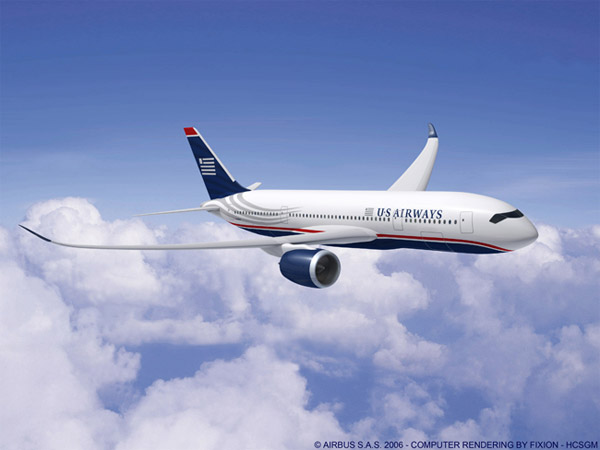
Following an agreement announced in June 2007, US Airways has now signed the contract for the purchase of 92 Airbus aircraft, including: 18 A350-800s, 4 A350-900s, 10 A330-200s, and 60 A320 Family aircraft. The airline is slated to receive its first A350 in 2014 with deliveries running through 2017. Delivery dates for the newly ordered A330s run from 2009 through 2010. The A320 Family order is comprised of 10 A321s, 40 A320s and 10 A319s with extensive conversion rights within the A320 Family. With this new A320 Family order adding to US Airway’s existing backlog of 37 orders for Airbus single-aisle aircraft, the A320 Family delivery stream to US Airways extends through 2012.

“Both the A320 Family and A330 have served us very well, and we look forward to capitalizing on the advantages the A350 XWB will add to our fleet,” said Doug Parker, Chairman and CEO of US Airways. “The combination of range, comfort and economics all these aircraft feature will offer our passengers the ideal service they have come to expect from US Airways.” Both America West and US Airways took delivery of their first A320 Family aircraft in 1998. Since that time, and since the airlines have joined forces under the US Airways brand, the airline has become the largest airline customer for Airbus in terms of aircraft ordered and aircraft operated.

“This order is a clear endorsement of every member of our twin-engine product line,” said John Leahy, Airbus Chief Operating Officer, Customers. “These aircraft work hard for the airline, and have the right balance of characteristics to please our customer and their customers. With the A350 being a major part of this contract, we’re very happy US Airways has decided to expand its fleet types in parallel with the evolution of the Airbus product line.

US Airways A350 XWB

GoAir takes delivery of first A320 from Airbus

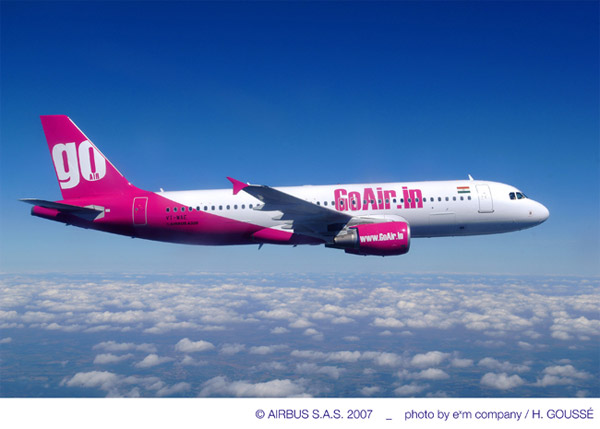
GoAir, ‘The Fly Smart Airline’, based in Mumbai, has taken delivery of its first A320 aircraft purchased directly from Airbus. The aircraft powered by CFM International engines was handed over to GoAir in a ceremony in Toulouse.

GoAir A320

The delivery is the first from an agreement for a total of 10 Airbus A320 family ordered at the Farnborough air show in 2006. All the aircraft from this order will seat 180 passengers in an all-economy layout.

“Today is a remarkable day in the growth of our airline and in its future success. Bringing these aircraft into service will allow GoAir to expand services to major business and leisure destinations across India and to offer new routes not previously served by air. We are excited about being able to offer the “Fly Smart” experience to more cities and passengers throughout India”, said Jeh Wadia, Managing Director, GoAir.

“We are delighted that Airbus has been a part of the GoAir success story and are proud our aircraft, the world’s most modern and most advanced single aisle airliner has been instrumental in this. All of us at Airbus wish GoAir a very bright future”, said John Leahy, Airbus Chief Operating Officer, Customers.

GoAir launched services with two leased A320’s in November 2005, with a further five leased A320’s joining the fleet in 2006. GoAir currently operates a fleet of Airbus A320s with 24 flights covering 13 cities including Jammu & Srinagar.

Ural Airlines signs firm order for 7 Airbus A320s

Ural Airlines, one of the leading Russian airlines, has signed a firm contract for the first time with Airbus, for the acquisition of seven A320s. It comes as a confirmation of the Memorandum of Understanding that was announced in June 2007 at the Paris air show. With this deal, Ural Airlines becomes a new Airbus customer.

Ural Airlines’ A320s will feature the all-new cabin that recently entered service on other members of the A320 Family, which provides more passenger comfort in a modern and brighter environment. The ordered aircraft will accommodate up to 160 passengers in a two-class configuration. The choice of engines has yet to be made. The airline plans to operate these aircraft on its international and domestic routes. Currently Ural Airlines operates two leased A320s on routes from Ekaterinburg to Moscow, Hurgada, Sharm-El-Sheikh, Munich, Dusseldorf, Prague, Bangkok, Delhi and Tianjin.

“The deal with Airbus became the most important event of the year for us”, said Sergej Skuratov, Ural Airlines CEO. “We have chosen A320, because this aircraft meets our demands in terms of operational efficiency, comfort and reliability. The conducted surveys give us the grounds to state that the purchase of Airbus aircraft is a win-win deal for both the airline and the passengers.”

“We are proud to welcome Ural Airlines as a new Airbus customer. We are sure that the aircraft’s advanced technology and efficiency, as well as its popularity with passengers and crews, and its market-leading environmental characteristics, will greatly contribute to Ural Airlines continued growth,” said John Leahy, Airbus Chief Operating Officer, Customers.

With advanced fuel-saving aerodynamic design, including wingtip fences and an all-new lighter cabin helping reduce fuel burn even further, the A320 Family is the most environmentally friendly aircraft type in operation. Centralised maintenance with extended servicing intervals and proven reliability in day-to-day service help to give it the lowest operative costs. In addition, the all new cabin design saves on weight and offers the passenger a quieter and roomier experience as well as significantly larger overhead stowage compartments. The A320 Family, which also includes the A318, A319 and A321, is recognised as the benchmark in the single-aisle aircraft market.

Eleven carriers from Russia and CIS currently operate 62 A320 Family aircraft and 92 more A320 family aircraft are to be delivered in the near future.
The A320 Family has more than 200 customers and operators. To date over 5,300 Airbus single-aisle aircraft have been ordered and more than 3,200 have been delivered.

SAS returns Q400 back to traffic

Following an extensive inspection program and parts replacement, SAS is now returning Dash8/Q400 aircraft to traffic. Flights will begin today and more aircraft will successively return to traffic after testing and parts replacement have been completed.

SAS chose to ground the entire Q400 fleet following two accidents, in Aalborg on September 9 and Vilnius on September 12, to replace parts identified as the cause of the accidents. This involved an actuator in the main landing gear that was affected by corrosion.

At an early stage, SAS decided to replace all actuators, whether they showed signs of corrosion or not. Accordingly, SAS took actions that went a step further than those required by the civil aviation authorities and the aircraft manufacturer.

SAS has conducted extensive inspections of the main landing gear and the nose gear, and undertook much more comprehensive inspections than those required by the civil aviation authorities and the aircraft manufacturer. Thereafter, the aircraft that are now being returned to traffic have undergone extensive test flights and have received the necessary airworthiness certificates from the authorities.

Eight of Scandinavian Airline’s Q400s are now ready to return to traffic – five in Denmark and three in Sweden. Test flights of the remaining aircraft in the fleet are continuing and they will be returned to traffic successively. In Denmark, the first flight will be to Hamburg on Thursday and in Sweden the first flight will be to Örnsköldsvik. In Denmark, there will be a total of seven flights with the Q400 on Thursday and in Sweden four flights. SAS expects that it will be able to offer its full traffic program not later than October 15. Wideroe plans to put three of its four Q400 aircraft in traffic on Thursday and the fourth on Sunday.

SAS will initiate discussions with Bombardier regarding compensation for the costs and lost income incurred due to the aircraft being grounded for about three weeks.

Source: SAS

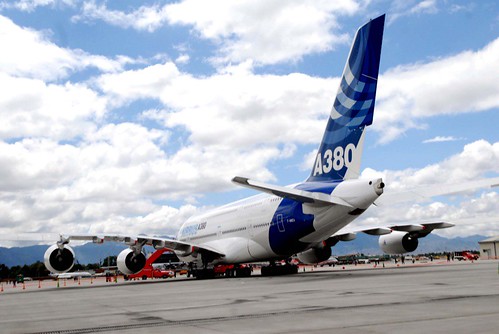
Photos – A380 at Bradley International Airport (BDL)

At flickr several people posted pictures of the Airbus A380 MSN 009 test aircraft visiting Bradley (BDL) (Connecticut, USA) on October 2 during a technical route proving flight. MSN 009 is equipped with the new Engine Alliance GP7000 engines.

Following the links to the galleries:

Vietnam Airlines acquires 10 A350 XWB and 20 additional A321

a350icon.jpgVietnam Airlines has signed a Memorandum of Understanding (MOU) for 10 A350-900 XWBs, as well as for 20 additional A321s. With this further commitment for Airbus aircraft, Vietnam Airlines becomes a strategic customer for the A350 XWB programme. Furthermore, with this commitment for the A350 and for additional A321s, Vietnam Airlines will become one of the largest Airbus operators in Asia.
Vietnam Airlines currently operates a fleet of 23 Airbus aircraft, including 10 A320s, 10 A321s and three A330s (two -200s and one -300). Five previously ordered A321s are still to be delivered.

“We thoroughly reviewed the A350 XWB programme, and we are very confident that this aircraft will set new standards of passenger comfort, operating economics and low emissions in our growing long-haul markets. The size of the A350-900 XWB responds very well to our expected traffic growth over the next decade,” said Mr Nguyen Sy Hung, Chairman and CEO of Vietnam Airlines. “Our A330s already provide us with an excellent level of economics combined with superior passenger appeal. The A350 XWB will further consolidate our successful growth and long term development into the future.”

“We are very proud to have one of the most successful and well respected airline like Vietnam Airlines to confirm its choice for the A350 XWB”, said Thomas Enders, Airbus Chief Executive Officer. “We are very grateful for this strong endorsement of the A350 XWB programme, and together with the additional A321s, we are also pleased to be playing a major role in Vietnam Airlines’ continued expansion of its regional network. We are delighted with our long-standing partnership with Vietnam Airlines, and look forward to continuing this relationship into the future.”

With Vietnam Airlines’ endorsement, total firm orders and commitments for the A350 XWB programme stand at 264 aircraft (154 firm orders and 110 commitments).

British Airways orders A380 – breaking loyalty to Boeing

British Airways has today placed an order for 12 Airbus A380 and 24 Boeing 787 aircraft with options for a further 7 Airbus A380s and 18 Boeing 787s. The airline will order both the B787-8 and B787-9. Both aircraft types will be powered by Rolls-Royce engines. The A380s will be powered by Rolls-Royce Trent 900 engines and the B787s will be powered by Rolls-Royce Trent 1000 engines. The engine order includes a lifetime maintenance contract.

This A380 order means a break of loyalty to Boeing, since British Airways used a Boeing-only longhaul fleet over decades.
The new aircraft will replace 20 of the airline’s B747-400s and its 14 longhaul B767 fleet and will be delivered between 2010 and 2014. The order, including options, will give the airline the ability to grow its capacity by up to four per cent per year and the flexibility to tailor its future capacity growth in line with market conditions.

The aircraft will be greener, quieter and more fuel efficient with significantly lower carbon dioxide emissions and reduced impact on local air quality. This was a key consideration in the order. In terms of CO2 emissions per seat, the A380’s performance will be 17 per cent cleaner than the Boeing 747-400’s, and the B787’s performance 30 per cent cleaner than the B767’s. In terms of NOx emissions, an A380 produces 10 per cent less than a B747-400, and a B787 produces 46 per cent less than a B767.

Willie Walsh, British Airways’ chief executive, said: “This is an exciting day for British Airways with our largest fleet order since 1998. It’s great news for our business, our customers and the environment.

“These aircraft set the gold standard when it comes to environmental performance in the key areas of CO2 emissions, local air quality and noise. They will contribute significantly to our target of improving fuel efficiency by 25 per cent between 2005 and 2025.

“They are also much quieter than their predecessors, which is of vital importance at Heathrow. Both the A380 and B787 are rated as producing a quarter of the noise level of the B747-400.” On the noise rating system at Heathrow, the A380 and the B787 are classed as QC 0.5 on arrival compared to QC2 for the B747-4. (That means they are rated as producing 25 per cent of a 747-400’s noise level.)

The new aircraft types will enable the airline to strengthen further its network strategy, complementing each other in the longhaul fleet. The A380 will be used to provide more capacity for the airline’s key high-density markets and maximise use of scarce Heathrow slots. The B787 will be used to start new routes and increase frequencies in existing markets.

Both aircraft bring significant economic benefits with lower costs per seat. They are both long range aircraft and bring more flexibility in to the fleet as, unlike the B767 that they replace, they can be flown across the airline’s network.

British Airways will continue to consider the most suitable aircraft to replace its remaining B747-400 aircraft and is examining the B787-10, B777-300 ER and A350XWB.

The total list price for the firm orders is US$8.2 billion for the airframe and engines.

The airline currently operates 114 longhaul aircraft – 57 Boeing 747-400, 43 Boeing 777s and 14 Boeing 767s.

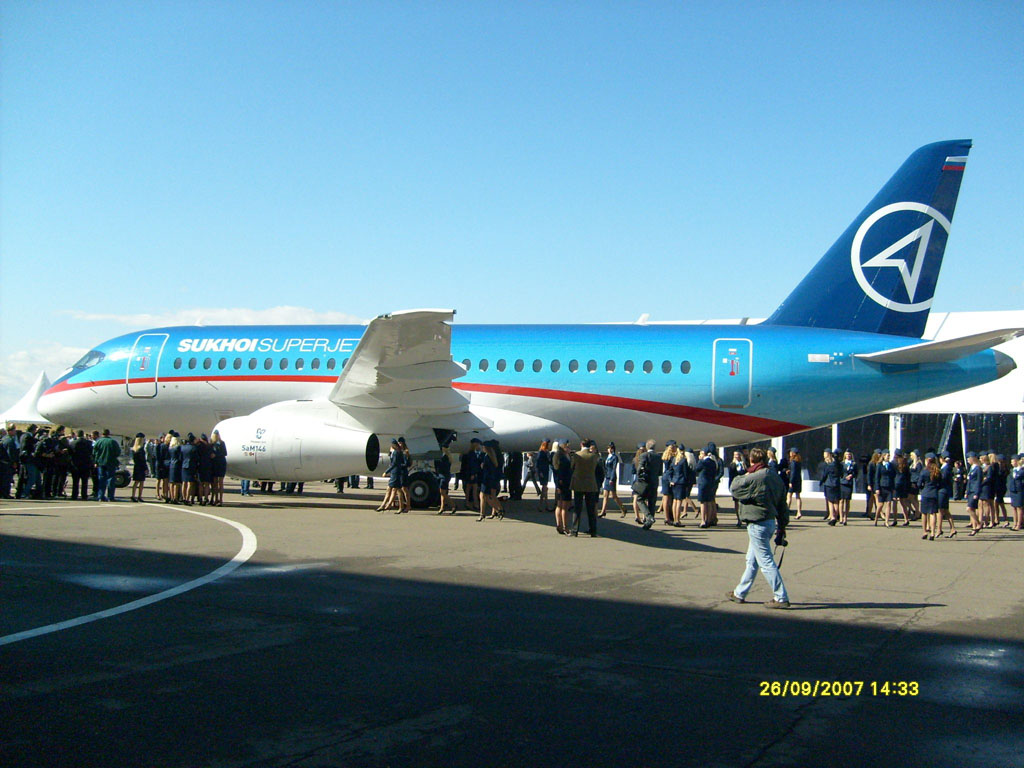
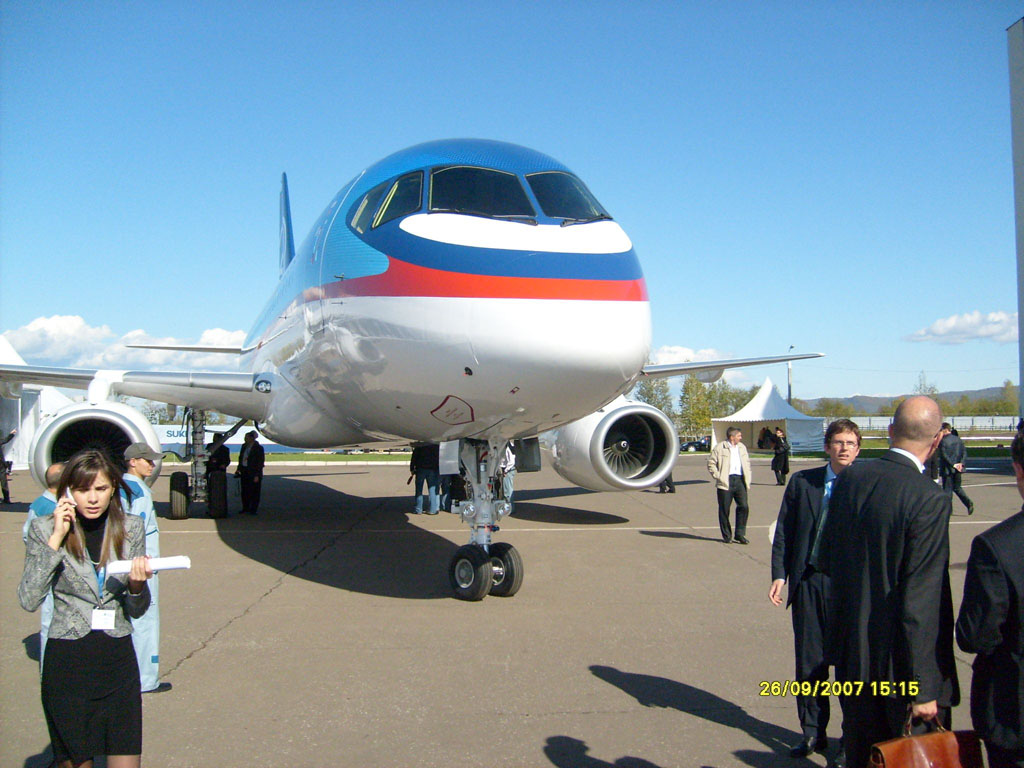
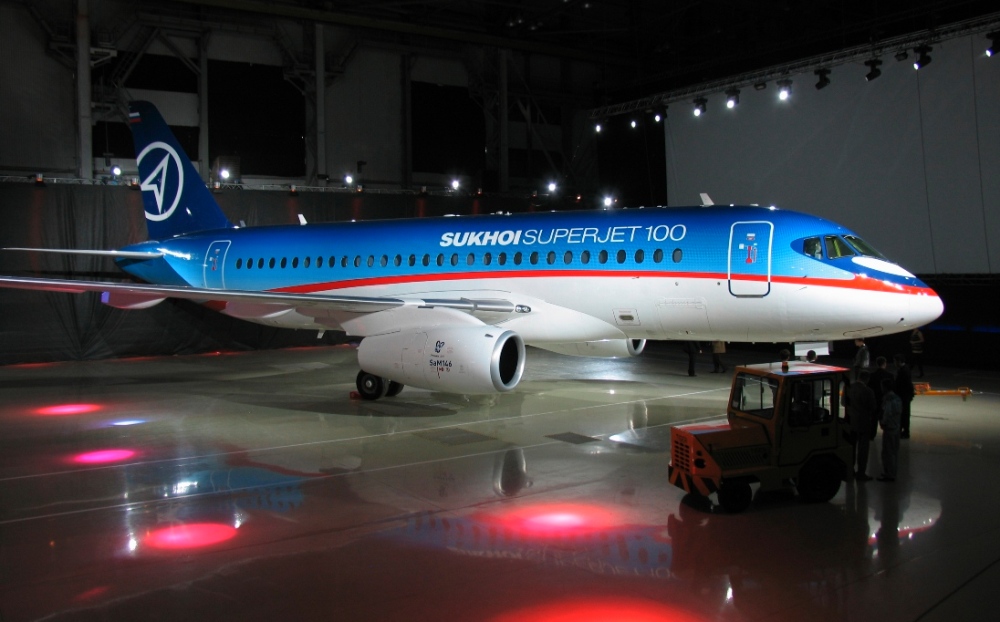
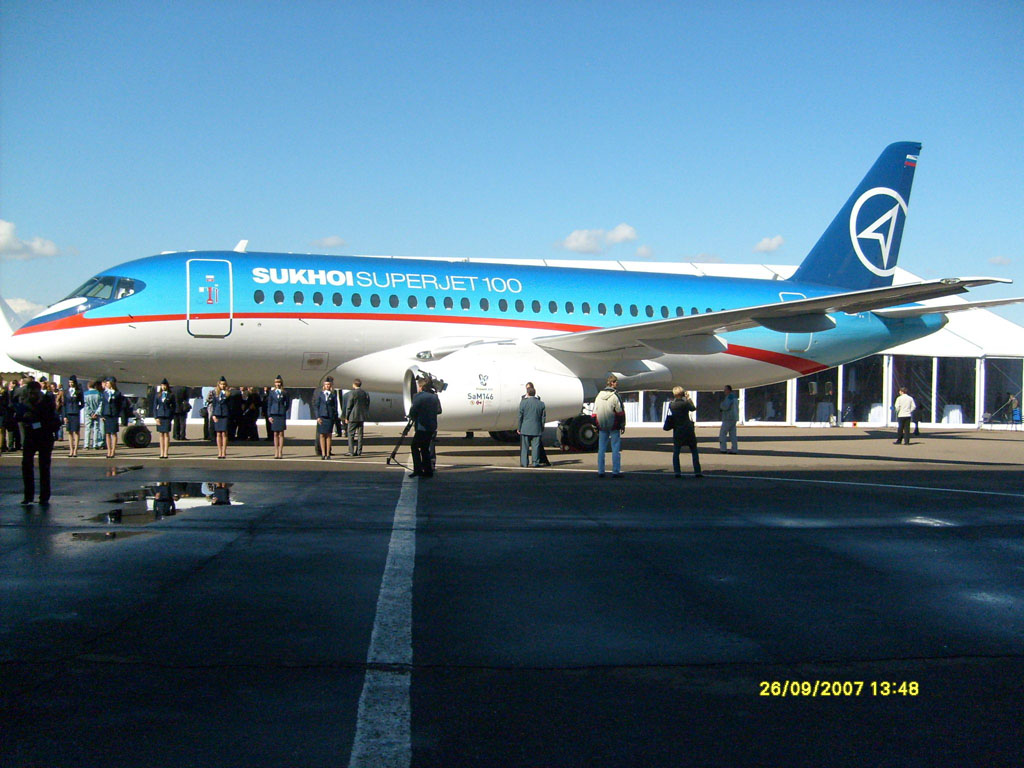
First Sukhoi Superjet 100 rolls out (Photos & Video)

Sukhoi Superjet 100 Roll Out Sukhoi Superjet 100 Roll Out Sukhoi Superjet 100 Roll Out Sukhoi Superjet 100 Roll Out Sukhoi Superjet 100 Roll Out

Photo Credit: Sukhoi.ru

Today, Sukhoi Superjet 100 was officially unveiled to the international aerospace community at the roll out ceremony. The Sukhoi Superjet 100 is a regional jet family in the 75 to 95-seat category. The Superjet 100 was formerly referred to as the Russian Regional Jet (Самолёт Российский Региональный Сухого), or “Sukhoi RRJ.” The name was changed on 17 July 2006.

The Sukhoi Superjet 100 is the first aircraft designed and produced in the new Russia. Today’s ceremony would not have happened without the support of all three states participating in the project – Russia, France and Italy. The rollout was attended by representatives of the ministries and state authorities of these countries. Mikhail Pogosyan, Sukhoi Company’s CEO, said: “Sukhoi Superjet 100 is a child of thousands of people around the globe, committed to the project success with their hearts and souls. It took us all six and a half years to get here, overcoming skepticism and finding our way in translation of international rules of play to Russian aerospace industry and incorporating world industry standards in it. Have a look at the aircraft – I’m sure, it was worth it.” The revealed aircraft airframe is ready for the flight tests – the fuselage had been joined, as well as the wings, control surfaces, and the attached engines. The aircraft is equipped with the major systems, for instance, auxiliary power unit and landing gear. Avionics blocks installation is under completion and pilot cockpit holds all panels, indicators, side-sticks, thrust levers and pedals.

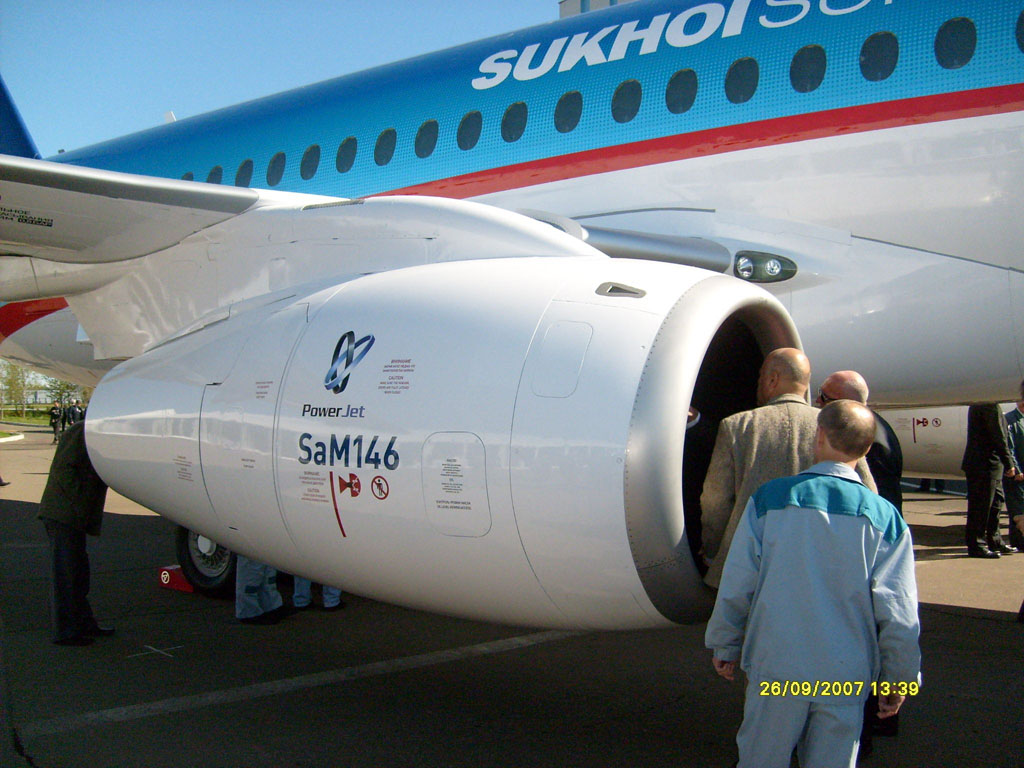
Speaking about the program status, Victor Soubbotin, Sukhoi Civil Aircraft Company’s President, said: “It’s a special day for us. A day when we can once again say – it’s just a beginning. We are on the way towards flight tests, entry into service in the fleet of our launch customer and a long life for the aircraft in the sky.” In the coming two months the aircraft is due to be ready for flight tests. For instance the static tests, being performed in TsAGI (Zhukovsky) should be completed. The same relates to system tests at suppliers’ test benches and their integration tests at Electronic Bird at SCAC. After that Sukhoi Superjet 100 will take off for its first flight. Today would be nothing special without the Program partners and suppliers. Strategic partner Alenia Aeronautica, a Fimeccanica company, who will soon become a SCAC shareholder (25%+1 share) and who with Sukhoi Company had already established the Superjet International joint venture for sales at mature markets and worldwide aftersales support. Boeing, who was a consultant to the project from its very launch. Risk-sharing partner Snecma, who together with Russian NPO Saturn (through their joint venture PowerJet) is responsible for the SaM146 engine.

Project suppliers contributed beyond estimation to the aircraft and developing Sukhoi Civil Aircraft Company competences:
Avionics: THALES; Flight control system: LIEBHERR (with Russian partner – Teploobmennik); Environmental control system: LIEBHERR; Landing gear: MESSIER DOWTY; Fuel system: INTERTECHNIQUE (ZODIAC); Interior: B/E AEROSPACE; Fire protection system: AUTRONICS (CURTISS WRIGHT); Oxygen system: B/E AEROSPACE; Auxiliary power unit: HONEYWELL; Crew seats: IPECO; Hydraulic system: PARKER; Electrical system: HAMILTON SUNDSTRAND; Engine vibration sensors: VIBRO-METER; Wheels, brakes: GOODRICH

Major subcontractors include Boeing Commercial Airplanes, Ilyushin, Yakovlev, and PowerJet. Boeing provides consulting in such areas as project management, market planning, certification and customer support. Snecma is providing some level of funding for the project. Hindustan Aeronautics Ltd. is negotiating a participatory role.

The aircraft will be equipped with two PowerJet SaM146 turbofans.

The Superjet 100 is intended to compete against the Antonov An-148, Embraer E-Jets and the Bombardier CSeries programs. Sukhoi’s director general Mikhail Pogosyan claims the SSJ will have 10-15% lower operation costs than its Embraer or Bombardier counterparts and its wider cabin will offer more comfort; at the catalogue price of $27.8 mln, it should also be cheaper by 18-22%. On the other hand, both Embraer and Bombardier offer much more comprehensive after-sales and maintenance network.

Sukhoi Civil Aircraft Company (SCAC) is a Sukhoi Company subsidiary. Founded in 2000, SCAC primarily aims to produce new models of civil aircraft. The Company’s pilot project is production of Sukhoi Superjet 100, a new family of Russian regional aircraft. SCAC is focused upon the following scope of activity: design and development, marketing and sales, production, certification of the aircraft. Worldwide aftersales support and sales at mature markets is handled by Superjet International, a joint venture founded by Sukhoi Company and Alenia Aeronautica. SCAC has several branches at the production sites located in Komsomolsk-on-Amur and Novosibirsk altogether employing 1,500+ people. Sukhoi Superjet 100 firm order portfolio totals 73 aircraft. Deliveries are to begin in 2008.