Archive for November, 2007

Atlasjet Crash in Turkey


An Atlasjet Airlines McDonnell Douglas MD-83 (TC-AKM) crashed today during landing in Isparta (Suleyman Demirel Airport), Turkey - killing all on board. The plane was belonging to World Focus Airlines, leased by Atlasjet Airlines.
Flight KK 4203 departed Istanbul (IST) at 00:50 on a domestic flight to Isparta (ISE). During approach to Isparta the airplane crashed on a hill approximately 5.000 feet in the northwest of the airport, at 01:35 local time. According to local media the plane had broken into two pieces, with its fuselage and tail landing in different locations. “Anatolia” reported the plane’s tail with engines was found at the top of a hill while the fuselage was 500 feet lower. All 56 people on board have been killed (Crew: 7 / Passengers: 49). Weather reported was “10km visibility, no strong winds” - sorry, no METAR yet.

Photos: http://fotogaleri.hurriyet.com.tr/GaleriDetay.aspx?cid=7879&p=1&rid=2

Video:

Source:
Atlasjet
aviation-safety.net

Safety Report - 11/29/2007

Date & Time: 11/28/2007 00:06
Location: Los Angeles, CA
Aircraft Type: Airbus A340-541 Registration: N/A
Airline: Thai Airways International Flight: THA795
Phase: Take-off
Damage: Unknown
Injuries & Fatalities: none
Description: On departure one or more tires blew, the flight continued to Thailand, damage reported to the access door

Source: FAA
Correctness of this posting is not guaranteed & completeness not intended. This posting is just for informational purpose.

Hawaiian Airlines choose Airbus A350 XWB and A330

Airbus today announced that Hawaiian Airlines has signed a Memorandum of Understanding (MoU) with Airbus for 6 Airbus A350 XWB-800s and 6 A330-200s, selecting Airbus aircraft for the first time in their history.

Hawaiian Airlines will begin receiving the new A330-200s starting in 2012 while A350 deliveries will begin in 2017. Both will be powered by Rolls-Royce Trent engines.

The A350 XWB-800s will seat 322 passengers in a two-class configuration (First and Coach) and have a range of 6,900 nautical miles, which will give Hawaiian the capability to fly nonstop between Hawaii and Asia, Australasia, the Americas and Europe. The A350 carries 24 percent more passengers and is 20 percent more fuel efficient per seat mile than Hawaiian’s current fleet.

The A330-200 will seat 305 passengers in a two-class configuration. With an operating range of 5,500 nautical miles, the A330 can fly significantly farther than Hawaiian’s current fleet and will provide the ability to serve all of North America and points in eastern Asia nonstop from Hawaii. In addition, the A330 carries 45 more passengers and is more fuel efficient than Hawaiian’s current fleet.

The aircraft will be deployed within the airline’s Pacific network, which currently extends from Hawaii to nine cities in the Western United States and three cities in the South Pacific.

Source: Airbus & Hawaiian

Door cutting completed for first 767-300 BCF

Boeing today announced that ST Aviation Services Company (SASCO), has completed the door cutting for the first 767-300 Boeing Converted Freighter (BCF). Door cutting signifies the start of the major activity in a passenger-to-freighter (PTF). It indicates the readiness of the aircraft for the replacement of the floor structures, installation of the new door surround structures and the eventual installation of the main deck cargo door.
The aircraft was inducted on Oct. 18 this year from All Nippon Airways (ANA), the launch customer for this program. The prototype is expected for redelivery in June 2008, after completion of flight tests and certification by Boeing.
The 767-300 passenger aircraft undergoes major modifications on its main deck, with the converted 767-300 BCF expected to have about the same cargo capability as the same model production freighter with approximately 50 tonnes structural payload at a range of approximately 3,000 nautical miles (5,930km) and 412,000lbs (187,270kg) maximum take off weight. There are 24 pallet positions on the main deck. As with the other BCF conversions, Boeing offers a variety of support packages that may be incorporated during 767-300 BCF conversions, including avionics and flight-deck upgrades. Airlines may also consider options such as carbon brakes, live animal and perishable food carriage, weight upgrade and integration of technical manuals.

Boeing 767-300 BCF Door Cutting Completed

Photo Credit: Boeing
Source: Boeing

Videos of the Day - A380 at Minneapolis (MSP)

On its way to Los Angeles (LAX) and afterwards to Sydney, the Airbus A380 MSN007 stopped by at Minneapolis (MSP). Qantas will do a route proving flight from LAX to SYD on Friday. View the schedule at: A380 to visit LAX and SYD next week

The A380 parked at MSP Airport Gate H7

A380 Pushback

A380 departure and following Runway inspection

Source: YouTube

Cessna 162 SkyCatcher to be built in China

Textron Inc.’s Cessna Aircraft Co. will become the first U.S. manufacturer to turn over complete production of an airplane to a Chinese partner, a move intended to cut production costs and foster a nascent private-aviation market in China.

Cessna officials said China’s state-owned Shenyang Aircraft Corp. will build the new Cessna 162 SkyCatcher at its factory in Shenyang, China. The planned single-engine, two-seat airplane will be the smallest in Cessna’s product line. It is designed for training and what is known as the light-sport market, for recreational fliers. …

Continue at source: http://online.wsj.com/article/SB119621169217505989.html

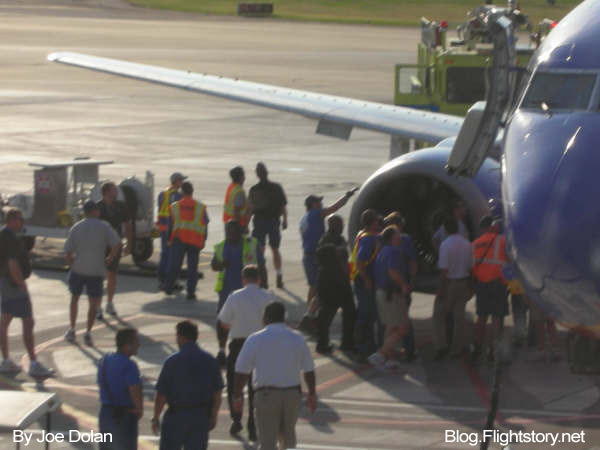
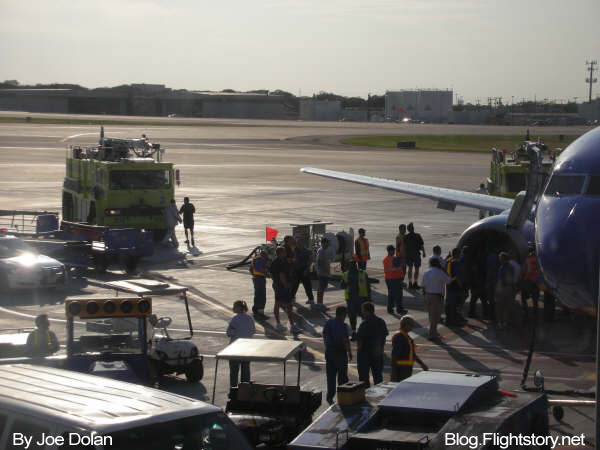
Follow-up - Southwest Engine Failure

Some days ago I posted information about a Southwest Airlines engine failure at Dallas. The FAA reported the Boeing 737 returned because of some vibration in the number 2 engine.

Apparently those information was wrong. Just a few days after posting I received a few comments of people who have been on this flight (#438). They stated it was no vibration, but a fatal engine failure.

Joe - Nov 21st, 2007 said:

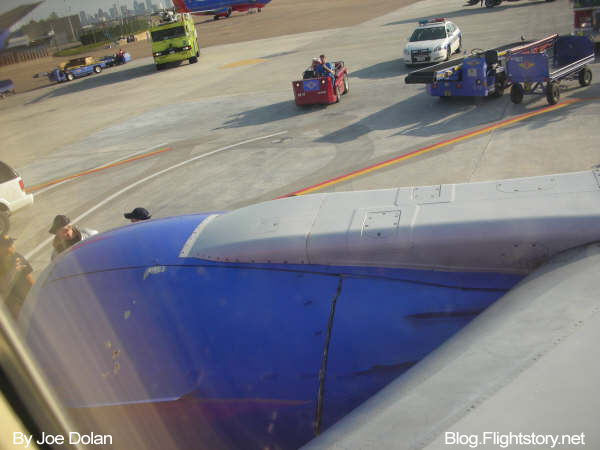
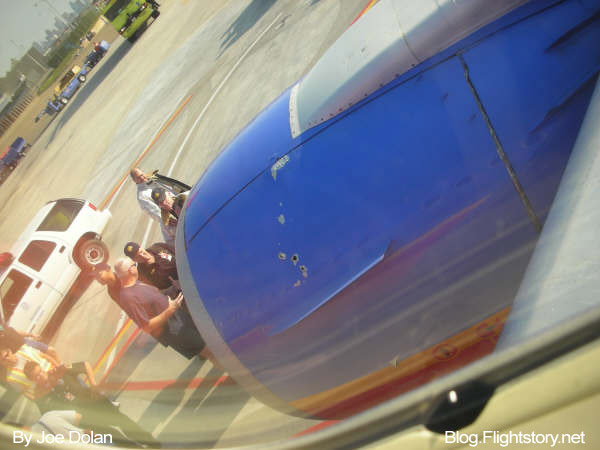
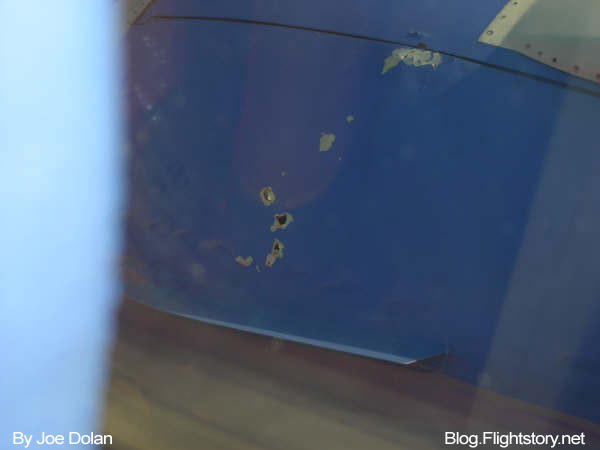
This is not true. It was not during takeoff. There was alot of damage. There was no vidration. It doesnt say anything about an uncontained explosion at 25,000ft. I was sitting on that engine watching it happen with my own two eyes. The fan blades shot out towards the plane leaving holes on the engine cowlings and a huge hole on th other side.There was no vidration, but a huge explosion. That report is false and they should really clean it up! The blades could have easily penatrated the fusalage causing a crash, or went through and killed a passenger. (…) I have pictures and I will let people see them (…)

Jen - Nov 22nd, 2007 said:

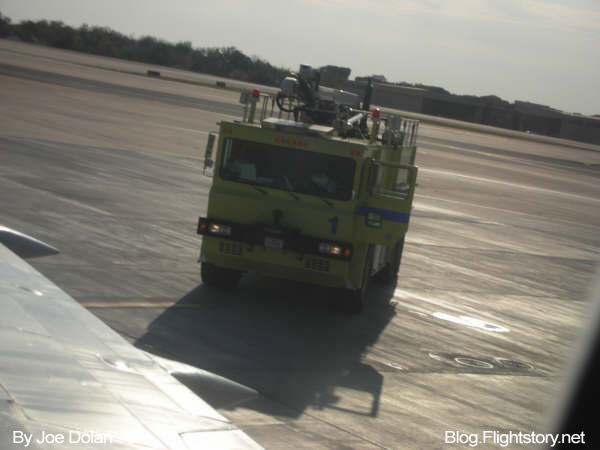
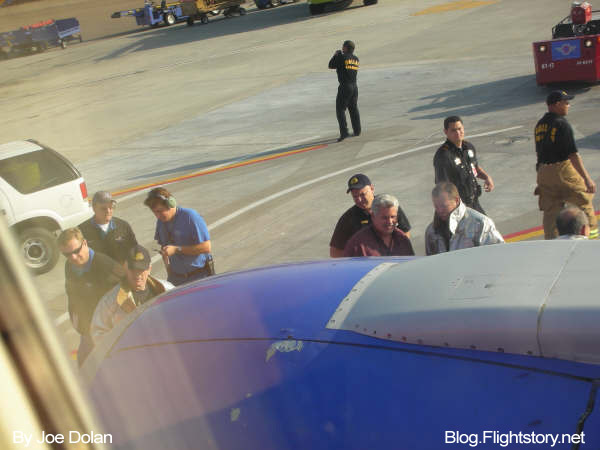
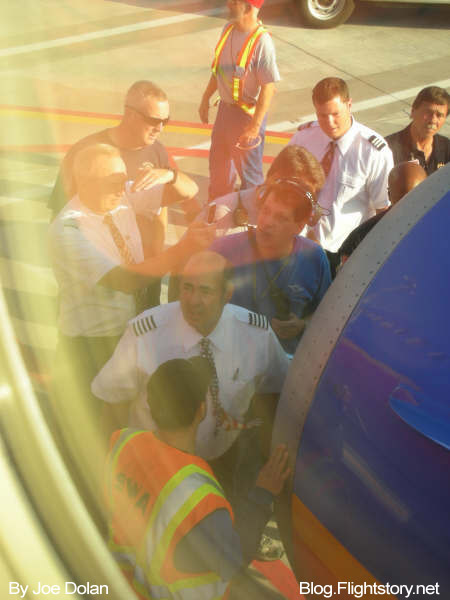
I was on this flight also- We all thought we were going to die! We said our goodbyes. There was an explosion and holes in the right engine with something sharp still sticking out of the engine. The plane started shaking so bad. The flight attendant was crying and one was getting oxygen because she was hyperventilating. They were able to turn the flight around and land with no incident but not before the longest 20 minutes back to the ground and the plane being surrounded by firetrucks. A big chunk of the engine flew off and luckily it went away from the aircraft because if it came toward us, we wouldn’t be here. The chunk was on the outer side of the engine not seen from our view but could be seen while walking off the aircraft. There were smaller holes though in our view of the top of the engine. I saw the pilots taking photos when we made it to the ground so hopefully the FAA will do the right thing and investigate how this could happen.

-Update-
Bob D. - Dec 2nd, 2007 said:

To everyone interested in Flight 438… Sorry if my co-passengers made some inexcusable spelling errors… They are probably still traumatized. To the idiots that think it was no big deal for this event to occur… IF you had been on that flight - you would still be scraping the turd out of your pants… The incident started with a large “explosive” type impact to the entire plane - resulting in a massive shaking and vibration throughout the entire plane - that felt like every rivet was working loose. For a few seconds, I initially thought a bomb had gone off in the luggage…We then experienced severe vibrations for appx. 10 minutes.
If the explosion had directed shrapnel towards the plane - armor or not, I am glad it did not, asI am reasonably sure it would have pierced through, or propelled the armor as a secondary missile - like a knife through butter, through the fuselage.
The FAA’s report - a few days afterwards, was a one liner, and did not adequately address the scope and nature of what transpired. I am surprised that this incident was not covered in-depth, or more publicized. Do your homework, research, BEFORE you make any assumpions.
I can say the crew and pilot, and the pilot’s on-board, all did a professional job - under the circumstances. The Pilot, who landed on one engine, had made an announcement, “On the simulator, we prctice landing on one engine…” He did it real time, and made it happen! He refused $20.00 for drinks. One of the impressive pilots on travel informed me, that the simulator did not adequately cover the entire spectrum of mechanical events that occured… Lessons learned!
The only negative thing that happened was someone gave a legal speech before our take-off on the next plane out of Dallas… “Acts of nature…” blah blah etc. etc. Did not need to hear that!
We got a free drink on that flight! Awesome! (Next time I would like it during the incident) P.S. I said an prayer, immediately after the “explosion” and shaking…It and all the others must have been heard - say your prayers, and by the way…thank you LORD! and thank you for blessing the pilot with professionalism and skill, thank you for blessing the entire array of personnel who make flying safe! I would get on a plane anytime - all the passengers, and I did, on the next flight out of Dallas!!! Of course we flew Southwest!
To all you skeptics and engineer types who simply explain away the human element of the entire episode - Try a little humility… and a prayer.

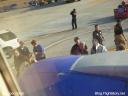
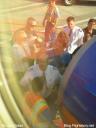
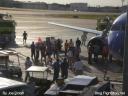
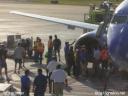
I asked for submitting these photos to make them publicly available, unfortunately I didn’t get anything.
In the meantime - and that’s really great - some pictures somehow leaked to the internet.
The following photos were posted at the PPrune Forum.


Lately these pictures are even circulating among the Dallas tv stations, a WFAA news reporter told me.

Thanks to Jack for submitting the link.

Update
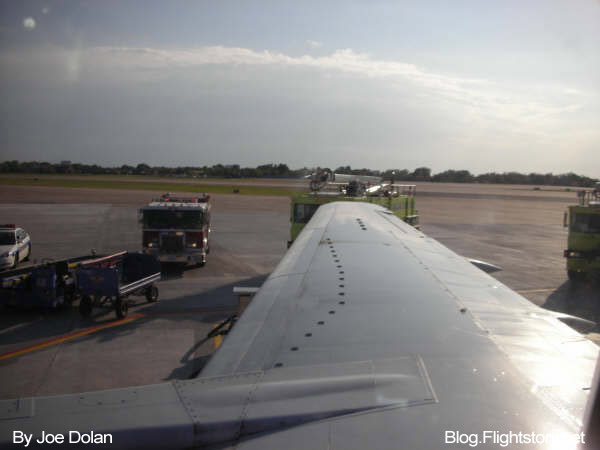
I just got further pictures from Joe, a passenger on this flight. Thanks Joe!
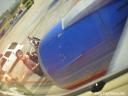
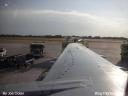
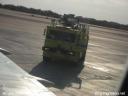
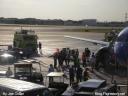
Southwest Airlines Engine Failure Southwest Airlines Engine Failure Southwest Airlines Engine Failure Southwest Airlines Engine Failure Southwest Airlines Engine Failure Southwest Airlines Engine Failure Southwest Airlines Engine Failure Southwest Airlines Engine Failure Southwest Airlines Engine Failure Southwest Airlines Engine Failure

For Preliminary NTSB Report visit:
Preliminary NTSB Report on Southwest Engine Failure Incident

TAP acquires A350XWBs and takes delivery of A330

Airbus today announced that TAP Portugal has signed a firm contract for 12 A350XWBs, plus 3 options, and a letter of intent for an additional 8 A320 Family aircraft. The Lisbon based airline herewith converts its initial order for the A350, placed in December 2005, into the new A350XWB, and has, simultaneously, increased the number of aircraft ordered, from 10 to 12.

At the same time TAP is taking delivery of its first directly owned A330-200. The aircraft powered, by General Electric CF6-80 engines was handed over, in a ceremony held in Toulouse. The aircraft will seat 268 passengers in a two-class configuration, and will join TAP’s fleet of seven A330-200s currently in operation.

Source: Airbus

A380 to visit LAX and SYD next week

Australian flag carrier Qantas is going to do an Airbus A380 route proving flight next week. The A380 used for the flight will be the development aircraft MSN007, powered by Rolls-Royce Trent 900 engines. MSN007 is equipped with an Airbus-designed full passenger cabin in a three-class layout. Visited cities will be Los Angeles (USA) and Sydney (Australia).

Schedule in detail:

  • November 28, 11:45 am (Pacific Time), arrival from Minneapolis (MSP) at Los Angeles International Airport (LAX) on Runway 25L
  • November 29, 7:30 am, departure for a demonstration flight over Southern California with 150 passengers invited by Qantas and Airbus. Returning back to LAX at 9:30 am on Runway 25L.
  • November 30, 8:00 am departure to Sydney (SYD), piloted by a joint Airbus-Qantas flight crew, from Runway 25L.

(This page will be updated as soon as further details emerge.)

Source: Los Angeles World Airports

Safety Report - 11/23/2007

Date & Time: 11/22/2007 23:58
Location: Atlanta, GA
Aircraft Type: McDonnell Douglas MD-88 Registration: N/A
Airline: Delta Air Lines Flight: 1070 & 1401
Phase: Other
Damage: Minor
Injuries & Fatalities: none
Description: Delta Air Lines flight 1070 and Delta Air Lines flight 1401 - both McDonnell Douglas MD-88 - scraped tails in the non-movement area, damage reported by FAA is minor on both aircraft


Date & Time: 11/21/2007 17:12
Location: Atlanta, GA
Aircraft Type: McDonnell Douglas MD-88 Registration: N952DL
Airline: Delta Air Lines Flight: 1257
Phase: Other
Damage: Minor
Injuries & Fatalities: none
Description: On pushback the tow bar broke and caused minor damage

Source: FAA
Correctness of this posting is not guaranteed & completeness not intended. This posting is just for informational purpose.

KLM orders additional 777-300ER and 737-700

Following the Airbus announcement yesterday about an additional A330 order by KLM, Boeing counters with an KLM order as well.
According to Boeing, KLM has additionally ordered 3 Next-Generation 737-700s and 2 777-300ERs (Extended Range). KLM also took options on 1 additional 737 and 2 additional 777s. The order was previously posted to the Boeing Orders and Deliveries Web site attributed to an “unidentified customer”.
Including the recent orders, the airline has 6 777-300ERs on direct order with Boeing and is scheduled to take delivery of its first of this model in the first quarter of 2008. KLM currently operates a fleet of 15 777-200ERs in a combination of leases and direct purchases.

Source: Boeing

Further Airbus A330 orders announced

Airbus announced several new A330 orders. Following the orders in detail.

US Airways expands A330 order
US Airways is expanding its A330 fleet with the purchase of 5 more A330-200 aircraft. This firm order is in addition to the 92 Airbus aircraft, including 10 A330-200s ordered by US Airways in October of this year.

Doug Parker, chairman and CEO of US Airways said: “The A330-200 with its superior range relative to our existing fleet will allow US Airways to continue international expansion to new destinations across the globe from the Pacific to the Atlantic. We intend to use the A330s to expand our existing gateways as well as provide the potential to eventually add intercontinental service from our west coast hubs.”

“We are delighted that US Airways, our largest world-wide operator, continues to choose Airbus aircraft for its fleet. This additional order reaffirms the A330 as a superb performer for US Airways’ expanding international route network,” said John Leahy, Airbus’ Chief Operating Officer-Customers.

KLM signs follow-up contract for 2 A330s
KLM Royal Dutch Airlnes has signed a contract for the acquisition of two further A330-200s plus an option on two, herewith bringing their total A330 fleet to 12 aircraft. This acquisition is part of the longer term fleet renewal and expansion plans of KLM.
The A330s, powered by CF6-80E(1A3) engines, will mainly serve on intercontinental and will have a two-class configuration with 251 seats.

Source: Airbus

Lockheed P-38 Lightning found on UK beach

65 years after an American USAF Lockheed P-38 Lightning ran out of gas and crash-landed on a beach in Wales, the long-forgotten World War II relic has emerged from the surf and sand where it lay buried. The aircraft is believed to be P-38F USAAF serial number 41-7677 assigned to the 49th Squadron, 14th Fighter Group, 8th Air Force. Experts hope to recover the plane for a British military museum.

American Lockheed P-38 Lightning at UK beach

Sunbathers and swimmers often frolicked within a few yards of the aircraft, unaware of its existence until last summer, when unusual weather caused the sand to shift and erode.
The revelation of the Lockheed “Lightning” fighter has stirred interest in British aviation circles and among officials of the country’s aircraft museums, ready to reclaim another artifact from history’s greatest armed conflict.
Based on its serial number and other records, “the fighter is arguably the oldest P-38 in existence, and the oldest surviving 8th Air Force combat aircraft of any type,” said Ric Gillespie, who heads a U.S.-based nonprofit group dedicated to preserving historic aircraft. “In that respect it’s a major find, of exceptional interest to British and American aviation historians.”
Gillespie’s organization, the International Group for Historic Aircraft Recovery, learned of the plane’s existence in September from a British air history enthusiast and sent a team to survey the site last month. The group plans to collaborate with British museum experts in recovering aircraft next spring. The aircraft is largely intact and remarkably free of corrosion.
“The difficult part is to keep such a dramatic discovery secret. Looting of historic wrecks, aircraft or ships, is a major problem, in Britain as it is worldwide,” Gillespie said.

British aviation publications have been circumspect about disclosing the exact location, and local Welsh authorities have agreed to keep the plane under surveillance whenever it is exposed by the tides of the Irish Sea, he said. For now, the aircraft is again buried under sand.
Officially, the U.S. Air Force considers any aircraft lost before Nov. 19, 1961 — when a fire destroyed many records — as “formally abandoned,” and has an interest in such cases only if human remains are involved.

The Wales Lightning, built in 1941, reached Britain in early 1942 and flew combat missions along the Dutch-Belgian coast. On September 27, 1942, fuel exhaustion during a training mission forced 2nd Lt. R. Frederick Elliott to land the large twin-engine fighter in shallow water near a beach in Wales. His belly landing sheared off a wingtip, but Elliott escaped unhurt. Less than three months later, the veteran of more than 10 combat missions was shot down over Tunisia, in North Africa. His plane and body were never found.

Following the accident, 8th Air Force authorities disarmed, but did not salvage, the aircraft which was soon covered by the shifting sand beneath the surf. At the time of Lt. Elliott’s mishap, few civilians in the local area were aware of the accident because the beaches in the United Kingdom were closed to the public during World War II and the press was not allowed to print stories about Allied wrecks. After the war, recreational use of the beaches resumed but the Lightning remained hidden.

The twin-engine P-38, a radical design conceived by Lockheed design genius Clarence “Kelly” Johnson in the late 1930s, became one of the war’s most successful fighter planes, serving in Europe and the Pacific. First delivered to the U.S. Army Air Corps in June 1941, the Lockheed P-38 was the only American fighter to remain in continuous production for the entire duration of the United States’ involvement in the Second World War. A total of 10,037 examples were built. An estimated thirty-two complete or partial airframes survive in museums and private collections worldwide. Approximately ten aircraft are reportedly airworthy. A similar number are displayed as extensively restored non-flying aircraft. The remaining airframes exist only as wreckage or parts to be used in rebuilds. Only one Lightning, the Smithsonian National Air & Space Museum’s P-38J 42-67762, a former training aircraft, survives as an original, unrestored example of the type.

The P-38F was the first model to see combat but no original example of the mark survives in any collection. Nearly all existing P-38s are late-production G, H, J and L models. In Papua New Guinea, components from four P-38F hulks (42-12647, 42-12652, 42-13084, and 42-13105) are reportedly being used to re-construct a single composite aircraft. Another P-38F, 41-7630, was recovered from under the Greenland icecap in 1992 and subsequently re-manufactured as “Glacier Girl” to create an airworthy P-38F. While attractive and evocative, the flyable aircraft is essentially a new P-38.
Developed to a United States Army Air Corps requirement, the P-38 had distinctive twin booms and a single, central nacelle containing the pilot and armament. The aircraft was used in a number of different roles, including dive bombing, level bombing, ground strafing, photo reconnaissance missions, and extensively as a long-range escort fighter when equipped with droppable fuel tanks under its wings. The P-38 was used most extensively and successfully in the Pacific Theater of Operations and the China-Burma-India Theater of Operations, where it was flown by the American pilots with the highest number of aerial victories to this date. America’s top ace Richard Bong earned 40 victories (in a Lightning he called Marge), and Thomas McGuire (in Pudgy) scored 38. In the South West Pacific theater, it was a primary fighter of United States Army Air Forces until the appearance of large numbers of P-51D Mustangs toward the end of the war.

Source: Yahoo News & TIGHAR
Photo Credit: TIGHAR
Link: The International Group for Historic Aircraft Recovery

3rd C-40C delivered to U.S. Air Force

The Boeing Company Friday 16th November delivered the third of three C-40C transport aircraft to the U.S. Air Force Reserve Command (AFRC), providing a critical airlift asset to government leaders on official business.
Maj. Gen. Robert Duignan, commander, 4th Air Force, accepted the aircraft at Boeing facilities in Seattle and flew it to Scott Air Force Base (AFB), Ill., where it will begin service with the AFRC.

U.S. Air Force Boeing C-40C (NG 737-700)

The 932nd and 375th Airlift Wings, units of the AFRC and Air Mobility Command respectively, will use the Next-Generation 737-700 Boeing Business Jet derivative to provide congressional delegations and senior government personnel safe, secure and reliable transportation — often to remote locations around the world — while supporting their need to conduct in-flight business.
Aircraft modifications include military avionics that augment the 737’s commercial flight deck; satellite communications equipment for passenger use; a reconfigurable interior that comprises 40 business-class seats, two work areas with conference table or divan and accommodations for 11 crew members; and auxiliary fuel tanks that extend the aircraft’s range to approximately 4,400 nautical miles.
The airplane joins a family of 18 C-40s already in service with the U.S. government: three C-40Cs with the Air National Guard at Andrews AFB, Md., as well as the two already delivered to AFRC at Scott AFB; four Air Force C-40Bs supporting the U.S. Combatant Commands at Andrews, Ramstein AFB, Germany, and Hickam AFB, Hawaii; and the U.S. Navy Reserve’s nine C-40As stationed at Naval Air Stations North Island, Calif., Fort Worth, Texas, and Jacksonville, Fla.

Source: Boeing
Photo Credit: Boeing - Jim Coley

FAA Report - 11/19/2007

Date & Time: 11/19/2007 00:25
Location: Denver, CO
Aircraft Type: Airbus A300B4-622R Registration: N740FD
Airline: FedEx
Phase: Landing
Damage: None
Injuries & Fatalities: none
Description: Tailstrike at landing in Denver

Date & Time: 11/17/2007 21:10
Location: Dallas, TX
Aircraft Type: Boeing 737 Registration: N/A
Airline: Southwest Airlines Flight: 438
Phase: Take-off
Damage: Unknown
Injuries & Fatalities: none
Description: Southwest Airlines flight 438, a Boeing 737, on departure experienced a vibration in the number 2 engine, engine sustained unknown damage, aircraft returned and landed without incident.
UPDATE: Visit: Follow-up - Southwest Engine Failure

Source: FAA
Correctness of this posting is not guaranteed & completeness not intended. This posting is just for informational purpose.


Tags

Contact


PixelPlane - Cheapest Pixels on the Web! Buy advertising space on airplanes and create some unique art!